HODGE PODGE SHOP
Capabilities

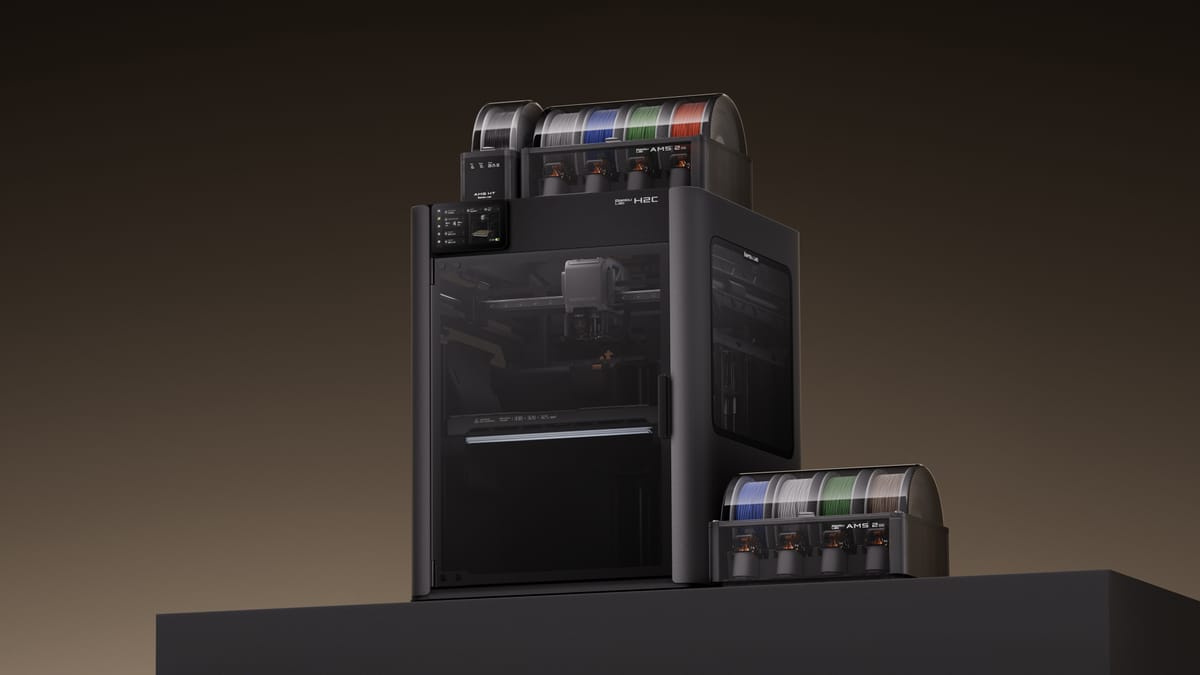
Built around a Bambu Lab H2C with AMS

Hodge Podge Shop is set up for practical 3D printed parts, prototypes, and custom jobs using a Bambu Lab H2C with AMS. That gives the shop solid build size, strong material flexibility, and multi-color capability for the kinds of prints most people actually need.

Bambu Lab H2C printer
Shop Printer

Bambu Lab H2C

This is the printer platform behind the shop's core production setup. It gives Hodge Podge Shop the ability to handle larger functional prints, stronger materials, and multi-color work with the AMS.

Build volume

The Bambu Lab H2C gives a strong working area for custom jobs. Single-nozzle prints can go up to 305 x 320 x 325 mm, which covers most brackets, enclosures, replacement parts, prototypes, and hobby pieces without needing to split the model.

Materials

With a 350 C max nozzle temperature, 120 C heated bed, and active chamber heating up to 65 C, the H2C is built for more than basic PLA. It is a strong fit for PLA, PETG, ABS, ASA, TPU, and tougher materials when the part needs better heat resistance or durability.

Multi-color printing

The H2C is built for multi-material work, and with the AMS in the setup it can handle a wide range of color changes for labeled parts, hobby prints, visual prototypes, and custom pieces that need more than one filament choice.

Detail and nozzle options

The printer supports 0.2, 0.4, 0.6, and 0.8 mm nozzles. That makes it possible to tune jobs for fine detail, stronger walls, or faster turnaround depending on what matters most for the final part.
Jobs that fit well

  • Replacement parts and functional brackets
  • Prototype enclosures and fit-check parts
  • Hobby pieces, terrain, and accessories
  • Short-run custom prints and one-off builds
  • Multi-color parts made possible by the printer and AMS setup

Jobs that may not be ideal

  • Food-contact parts unless specifically planned for that use
  • Large cosmetic-only pieces that need a factory-smooth finish
  • Safety-critical parts where hobby FDM tolerances are not the right solution
  • Jobs that need machining-level tolerances without any design allowance

What to expect

Every printed part is still a balance of size, material, detail, strength, and turnaround. If a job looks like a good fit for the H2C platform, the file can be reviewed and the best setup can be chosen before printing starts.